|
Isa Muradli
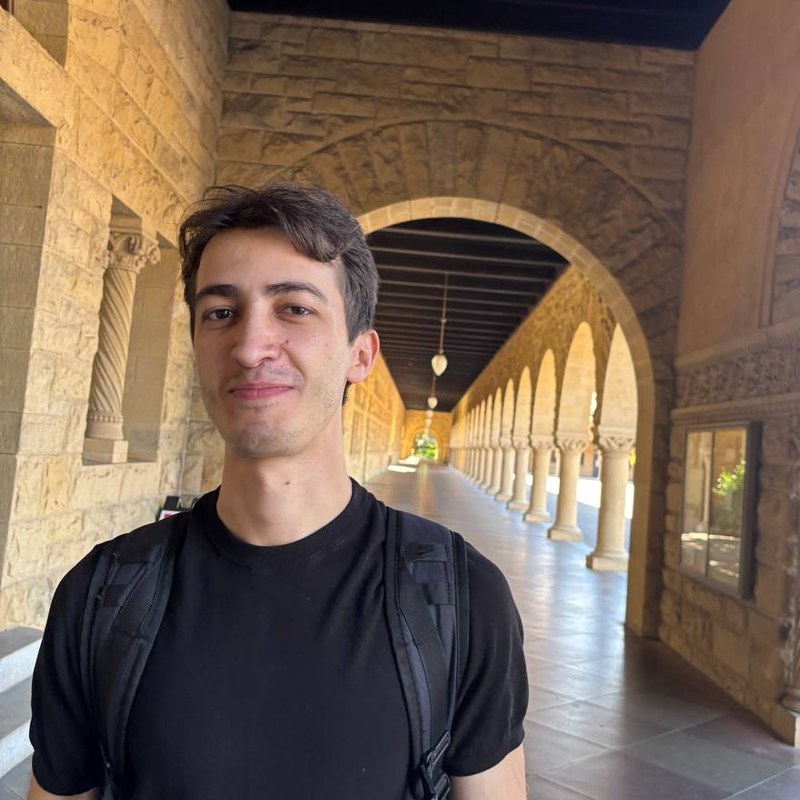
I am a third-year Ph.D. candidate in Computer Science at the Illinois Institute of Technology, advised by Dr. Xian-He Sun and Dr. Anthony Kougkas. My research is in high-performance computing, focusing on parallel and distributed processing, I/O optimization, and integrating GPU-accelerated computing into standalone HPC applications to overcome the memory wall.
I am currently a Ph.D. intern at NVIDIA, where I work under the mentorship of Quincey Koziol.
Outside of research, I enjoy playing volleyball and tennis, and reading history and literature.
Scholar /
Github /
LinkedIn /
CV
|
|
Research
I'm broadly enthusiastic about accelerating the I/O pathway and compute for systems under constrained resources.
|
Insights into GPUDirect Data Transfer through NIXL Benchmarking
Isa Muradli, Jie Ye, Luke Logan, Anthony Kougkas, Xian-He Sun
IEEE International Conference on eScience (eScience), 2025
doi /
abstract /
bibtex
Scientific applications are turning to GPUs to analyze and produce data due to advances in AI technologies. However, getting data to the GPU from storage is a challenge. Although technologies such as NVIDIA GDS and NIXL exist, limited research has been conducted on the actual benefits and trade-offs of these technologies. Our motivation is to explore the benefits and trade-offs of using GDS and the NIXL library by running benchmarking experiments.
@misc{muradli2025gpudirect,
  title={Insights into {GPUDirect} Data Transfer through {NIXL} Benchmarking},
  author={Muradli, Isa and Ye, Jie and Logan, Luke and Kougkas, Anthony and Sun, Xian-He},
  booktitle={21st IEEE International Conference on eScience (eScience '25)},
  year={2025},
  month=sep,
  address={Chicago, USA},
  note={Poster presentation}
}
|
Towards an AI-Driven Scientific Workflow
Shazzadul Islam, Jaime Cernuda, Isa Muradli, Anthony Kougkas, Xian-He Sun
IEEE International Conference on eScience (eScience), 2025
doi /
abstract /
bibtex
Modern scientific computing requires researchers to navigate a complex ecosystem of disconnected tools and technologies. A typical computational workflow follows sequential stages—data gathering, resource allocation, application deployment, and data analysis—each requiring distinct tools and manual management, diverting scientists from hypothesis-driven discovery to computational housekeeping. Rapidly evolving and diverse computing architectures intensify the problem, demanding specialized tools to meet High Performance Computing (HPC) needs for massive data volumes and extreme performance requirements. This requires researchers to adapt their workflows to new hardware and programming models, leading to productivity barriers as they must master dozens of tools before beginning scientific investigations.
@misc{islam2025aidriven,
  title={Towards an {AI}-driven scientific workflow},
  author={Islam, Shazzadul and Cernuda, Jaime and Muradli, Isa and Kougkas, Anthony and Sun, Xian-He},
  booktitle={2025 IEEE International Conference on eScience (eScience)},
  year={2025},
  month=sep,
  address={Chicago, USA},
  note={Poster presentation}
}
|
Teaching
Teaching Assistant, CS 430: Introduction to Algorithms, Illinois Institute of Technology
Lectured and mentored 90+ students in this advanced undergraduate course, guiding them through core algorithm design techniques and the mathematical analysis of time and space complexity.
|
|